Bus, train or flight in Vietnam: compare the complete journey
Choose transport within Vietnam by comparing hotel-to-hotel time, comfort, luggage and connection risk rather than ticket price or flight duration alone.

Published on 11 min read
On this page
Vietnam is a long country, and choosing the fastest-looking transport option does not always give you the fastest trip.
A one-hour flight may also mean:
- traveling to the airport
- arriving early for check-in
- waiting for baggage
- traveling from the airport to your hotel
Meanwhile, a train or bus may leave closer to the city center and take you directly to your destination.
The best way to compare transport in Vietnam is to look at the complete journey, not only the scheduled travel time.
Prices checked: September 2026. Transport prices change by date, seat type, operator and holiday period. Use the prices below as a guide and check the live fare before booking.
Quick comparison
| Transport | Usually best for | Typical price | Main advantage |
|---|---|---|---|
| City bus | Travel inside a city | Free to around 20,000 VND | Very cheap |
| Limousine / intercity bus | Short and medium routes | 100,000–400,000+ VND | Many routes and departures |
| Sleeper bus / cabin bus | Medium and overnight routes | 200,000–750,000 VND | Can save a hotel night |
| Train | Scenic and overnight journeys | 80,000–1,500,000+ VND | More space and central stations |
| Domestic flight | Long distances | Around 600,000–2,000,000+ VND | Fast for long journeys |
| Metro | Moving around Hanoi or Ho Chi Minh City | Low-cost urban fares | Avoids road traffic |
The cheapest option is not always the best one.
Consider:
hotel → station/airport → waiting time → journey → arrival transfer → hotel
before deciding.
City buses in Vietnam
Public buses are one of the cheapest ways to move around Vietnamese cities.
They are most useful in:
- Ho Chi Minh City
- Hanoi
- Da Nang
- Hue
- Nha Trang
- Hai Phong
- Can Tho
Google Maps can sometimes show public transport routes, but local transport apps can give better information.
Ho Chi Minh City buses are currently free
There is an important change for travelers visiting Ho Chi Minh City in 2026.
From July 1 to December 31, 2026, Ho Chi Minh City is covering 100% of the fare on 134 eligible city bus routes.
Until September 30, 2026
Passengers on eligible routes can simply board the bus.
No ticket purchase or passenger identification is required during this first phase.
This applies to visitors as well as local passengers.
From October 1 to December 31, 2026
The free-bus program continues, but the city plans to record or verify passengers using methods such as:
- bank cards
- electronic wallets
- MultiGo
- electronic identification
- other supported digital methods
Separate guidance is expected for visitors and other special passenger groups.
If you visit during this period, check the latest instructions in MultiGo or through the Ho Chi Minh City Public Transport Management Centre.
Which buses are not free?
The free program does not cover every bus operating in the city.
Excluded services include some:
- interprovincial buses
- airport-connection routes
- tourist open-top buses
- routes operating like interprovincial services
Always check the route before boarding.
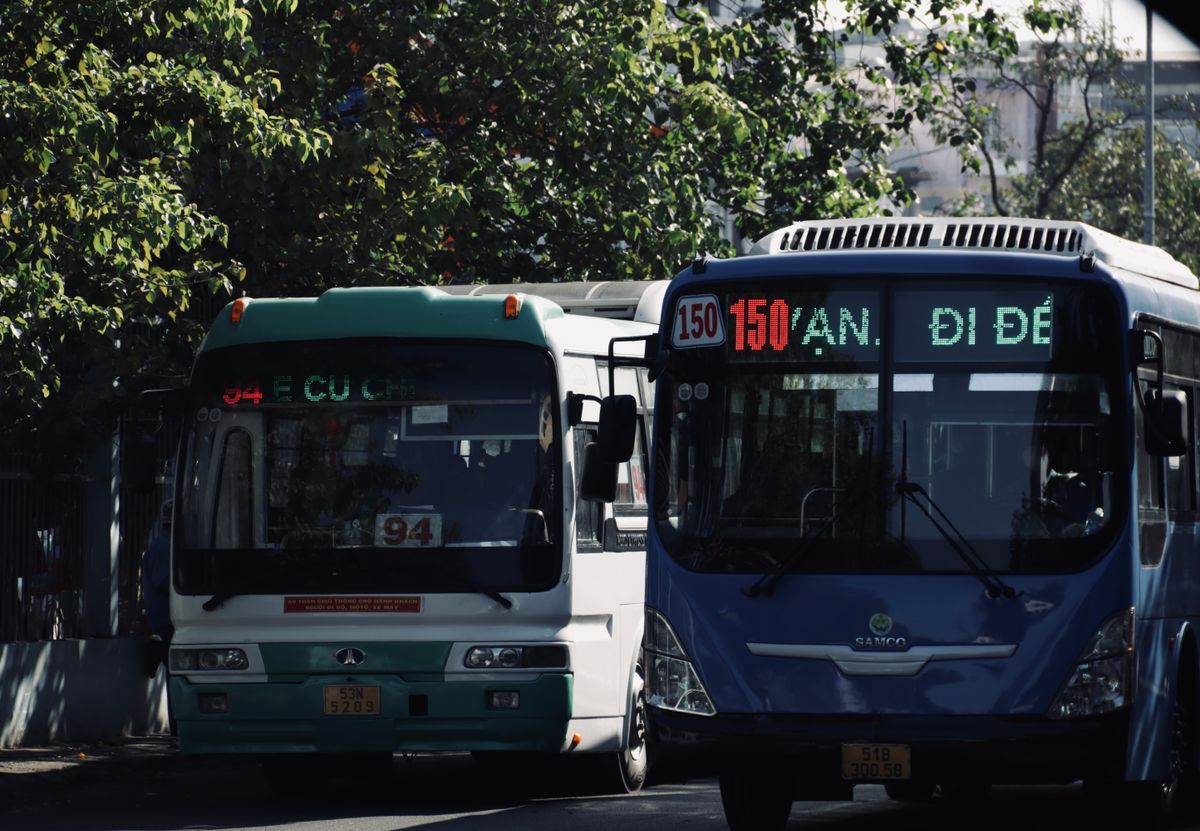
How do you find a Ho Chi Minh City bus?
The easiest option is to use MultiGo.
You can search:
- your current location
- your destination
- available bus routes
- nearby bus stops
- transfer points
The official Ho Chi Minh City public transport route planner is also useful.
For a tourist, buses are especially useful when you are not in a hurry.
If a 15-minute Grab ride becomes a 45-minute bus journey with two transfers, paying for Grab may still make more sense.
Ho Chi Minh City Metro
Ho Chi Minh City’s Metro Line 1 connects Ben Thanh with Suoi Tien.
It is useful for areas such as:
- Ben Thanh
- Opera House
- Ba Son
- Thao Dien
- An Phu
- Thu Duc
- Suoi Tien
Normal single fares are around:
6,000–20,000 VND per journey
depending on distance and payment method.
Other ticket options include:
| Ticket | Price |
|---|---|
| 1-day unlimited ticket | 40,000 VND |
| 3-day unlimited ticket | 90,000 VND |
| Standard monthly pass | 300,000 VND |
For visitors staying near a station, the metro can be faster than road transport during busy traffic periods.
Hanoi buses and metro
Hanoi also has an extensive public bus network.
Current electronic bus fares use a distance-based system, starting from a low base fare and increasing with distance.
For most tourist journeys, public buses remain inexpensive.
Hanoi also has urban railway lines including:
- Cat Linh – Ha Dong
- Nhon – Hanoi Railway Station section
If your hotel and destination are close to the metro, it can help you avoid Hanoi traffic.
For short visits, however, Grab can still be easier when several bus or metro transfers are required.
Intercity buses: one of the easiest ways to travel Vietnam
For journeys between nearby cities, buses are often the most practical option.
In Vietnam, there is an important difference:
Xe buýt usually means a local city bus.
Xe khách means an intercity coach.
Tourists will also see:
- limousine vans
- sleeper buses
- VIP sleeper buses
- private cabin buses
What is a limousine bus?
A Vietnamese “limousine” is usually not a stretch limousine.
It is normally a comfortable van or small coach with larger reclining seats.
They are useful for routes such as:
- Hanoi → Ninh Binh
- Hanoi → Ha Long
- Hanoi → Sapa
- Ho Chi Minh City → Vung Tau
- Ho Chi Minh City → Can Tho
- Da Nang → Hue
- Da Nang → Hoi An
Some operators offer pickup from hotels or offices in central areas.
This can make the complete journey much faster than traveling to a large bus station first.
What is a sleeper bus?
Sleeper buses have reclining or almost-flat beds instead of normal seats.
They are common on longer routes.
You may also see VIP cabin buses, where each passenger gets a more private sleeping space.
Sleeper buses are useful for overnight trips such as:
- Hanoi → Sapa
- Ho Chi Minh City → Da Lat
- Ho Chi Minh City → Nha Trang
- Da Nang → Da Lat
If you are tall, remember that Vietnamese sleeper beds can feel short.
Check photos of the bus before booking.
How much do intercity buses cost?
Here are some current examples from September 2026:
| Route | Approximate bus price |
|---|---|
| Ho Chi Minh City → Vung Tau | from around 120,000 VND |
| Ho Chi Minh City → Can Tho | from around 140,000 VND |
| Ho Chi Minh City → Da Lat | from around 149,000–200,000 VND |
| Ho Chi Minh City → Phan Thiet | from around 149,000 VND |
| Hanoi → Sapa | from around 210,000 VND |
| Da Nang → Hue | from around 96,000 VND |
VIP cabins can cost much more.
For example, Hanoi–Sapa luxury sleeper or cabin services can reach around:
300,000–750,000 VND
depending on the operator and type of seat.
How to buy bus tickets
There are several ways.
Option 1: Vexere
For international travelers, Vexere is one of the easiest places to compare buses.
You can search by:
- departure city
- destination
- date
- departure time
- bus type
- pickup location
You can also see passenger reviews for many operators.
After booking, you normally receive an electronic booking confirmation.
You usually do not need to print the ticket.
Option 2: Buy directly from the bus company
Large operators such as FUTA Bus Lines / Phuong Trang have their own websites, apps and ticket offices.
Buying directly can be useful if you already know which company you want.
Some operators also provide a free shuttle between their bus station and parts of the city.
Always check whether the ticket includes a transfer.
Option 3: Buy at the bus station
You can also buy tickets directly at major stations.
In Ho Chi Minh City, important long-distance terminals include:
- Mien Dong Bus Station
- New Mien Dong Bus Station
- Mien Tay Bus Station
In Hanoi, common terminals include:
- My Dinh
- Giap Bat
- Nuoc Ngam
Buying at the station works, but for popular routes it is usually easier to book online.
During:
- Tet
- public holidays
- weekends
- summer holidays
good buses can sell out.
Trains in Vietnam
Vietnam’s main railway runs from northern to southern Vietnam.
It connects destinations including:
Hanoi → Ninh Binh → Dong Hoi → Hue → Da Nang → Nha Trang → Ho Chi Minh City
The train is not usually the fastest option.
But it can be one of the most enjoyable.
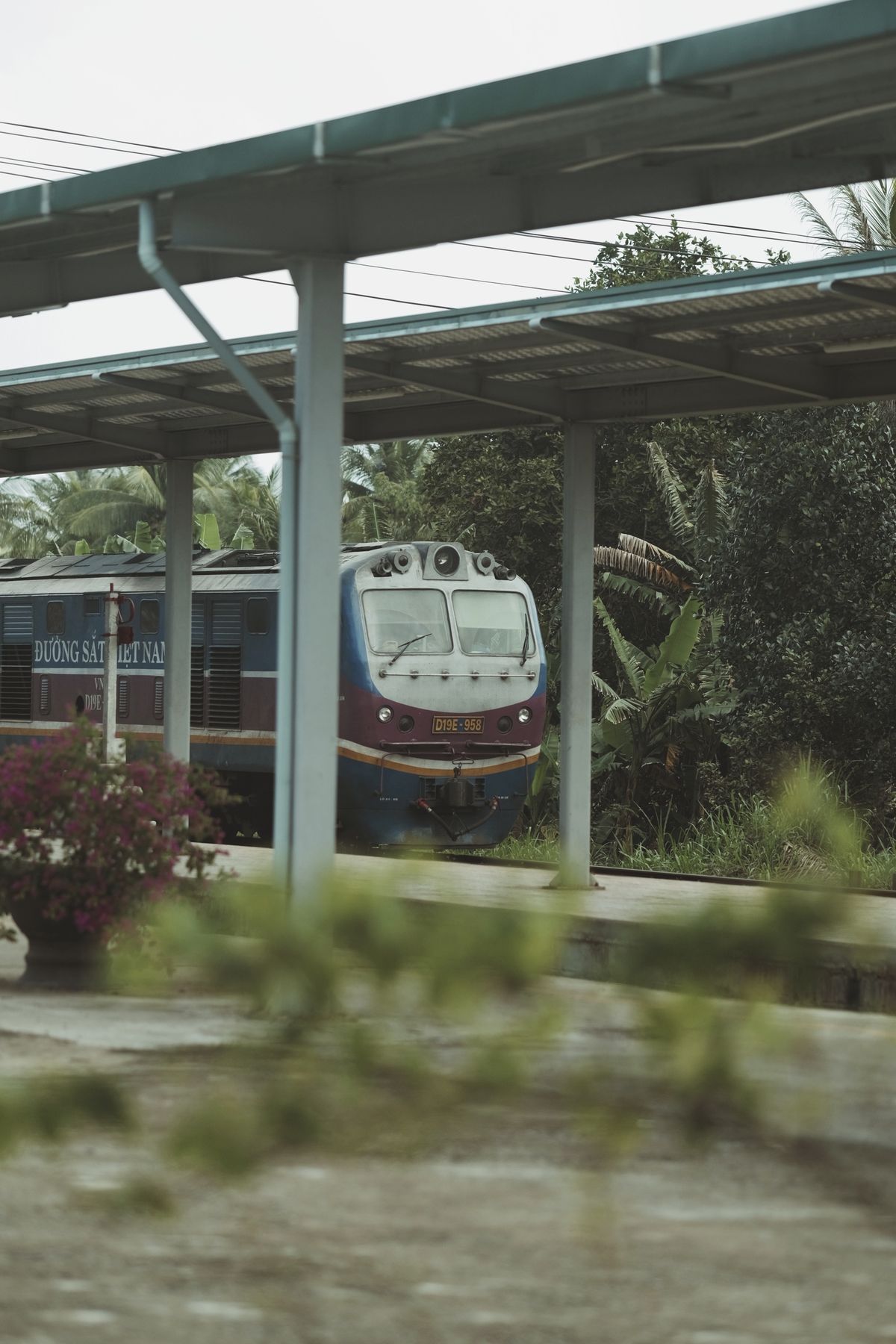
Train seat types
When booking, you will normally see several choices.
Soft seat
Similar to a normal reclining train seat.
Best for shorter daytime journeys.
Good routes include:
- Hanoi → Ninh Binh
- Da Nang → Hue
6-berth sleeper
Six beds inside one cabin.
Usually cheaper than a four-bed cabin.
4-berth soft sleeper
Four beds inside a cabin.
For overnight journeys, this is often the most comfortable standard option.
Lower beds usually sell first.
Current train price examples
Train prices change by train, seat and date.
Examples checked in September 2026:
| Route | Journey time | Approximate fare |
|---|---|---|
| Hanoi → Ninh Binh | about 2h 10m | 100,000–230,000 VND |
| Da Nang → Hue | about 2h 30m–3h | 80,000–150,000+ VND |
| Ho Chi Minh City → Nha Trang | about 7–8h | 360,000–780,000 VND |
| Hanoi → Da Nang | about 15–17h | 740,000–1,470,000 VND |
The exact price depends heavily on whether you choose a seat or sleeper berth.
How to buy train tickets
The safest option is the official Vietnam Railways booking system.
You can:
- enter your departure station
- choose your destination
- select your date
- choose a train
- choose your seat or bed
- enter your passenger details
- pay
- receive an electronic ticket
Foreign travelers should enter their passport information correctly.
Vietnam Railways states that the identity information used for travel must match the information on the electronic ticket.
Keep your passport with you when boarding.
You can also buy train tickets through Vexere or directly at railway stations.
Do you need to print a Vietnam train ticket?
Usually, no.
Keep the electronic ticket on your phone.
It is still a good idea to:
- screenshot the ticket
- screenshot the booking code
- keep your passport accessible
This helps if mobile data is weak at the station.
One train route worth taking for the view
The journey between Da Nang and Hue is one of the easiest train trips to recommend.
The railway crosses the Hai Van Pass, with views of:
- mountains
- coastline
- beaches
- Lang Co
- the sea
A bus may sometimes be faster.
But on this route, the train journey itself is part of the experience.
Domestic flights
For long distances, flying can save a huge amount of time.
Vietnam has a large domestic air network.
Common routes include:
- Hanoi → Ho Chi Minh City
- Hanoi → Da Nang
- Hanoi → Phu Quoc
- Ho Chi Minh City → Da Nang
- Ho Chi Minh City → Phu Quoc
- Ho Chi Minh City → Nha Trang
- Ho Chi Minh City → Hue
Major domestic airlines include:
- Vietnam Airlines
- VietJet Air
- Vietravel Airlines
- other domestic operators depending on the route
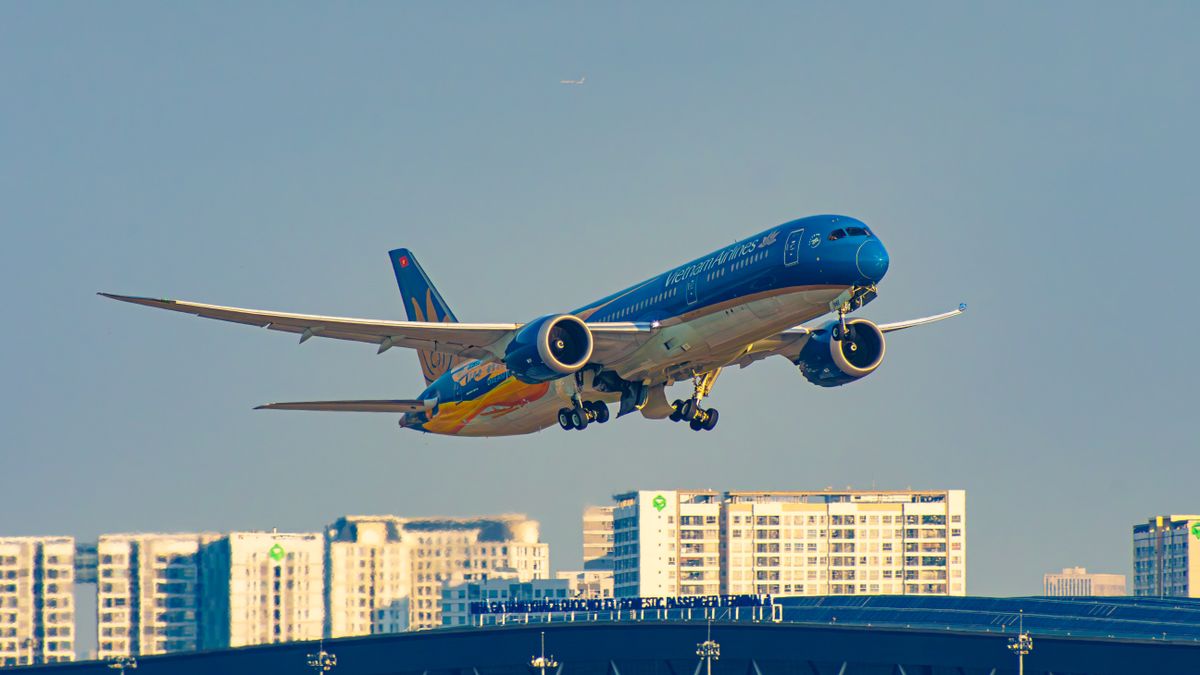
How much do domestic flights cost?
Airfares change constantly.
As a rough guide, many normal one-way domestic tickets can cost around:
600,000–2,000,000 VND
but fares can be lower during promotions or much higher during holidays.
For example, fares found for Ho Chi Minh City → Da Nang in September 2026 started at around 612,000 VND on some dates.
Vietnam Airlines prices on similar routes can start closer to around 900,000–1,200,000 VND depending on the day.
Low-cost airlines may display very cheap base fares.
But always check the final price.
A cheap flight may not really be cheap
Imagine you see this:
Flight: 350,000 VNDSources & verification
Last verified:
Official source
Vietnam Tourism: Transport within VietnamOfficial source
Vietnam Railways: Official ticket booking