Pho in Vietnam: Types, Regional Styles
Discover pho in Vietnam: beef and chicken options, northern and southern styles, prices, ordering phrases, and practical tips for your first bowl.
Published on 10 min read
On this page
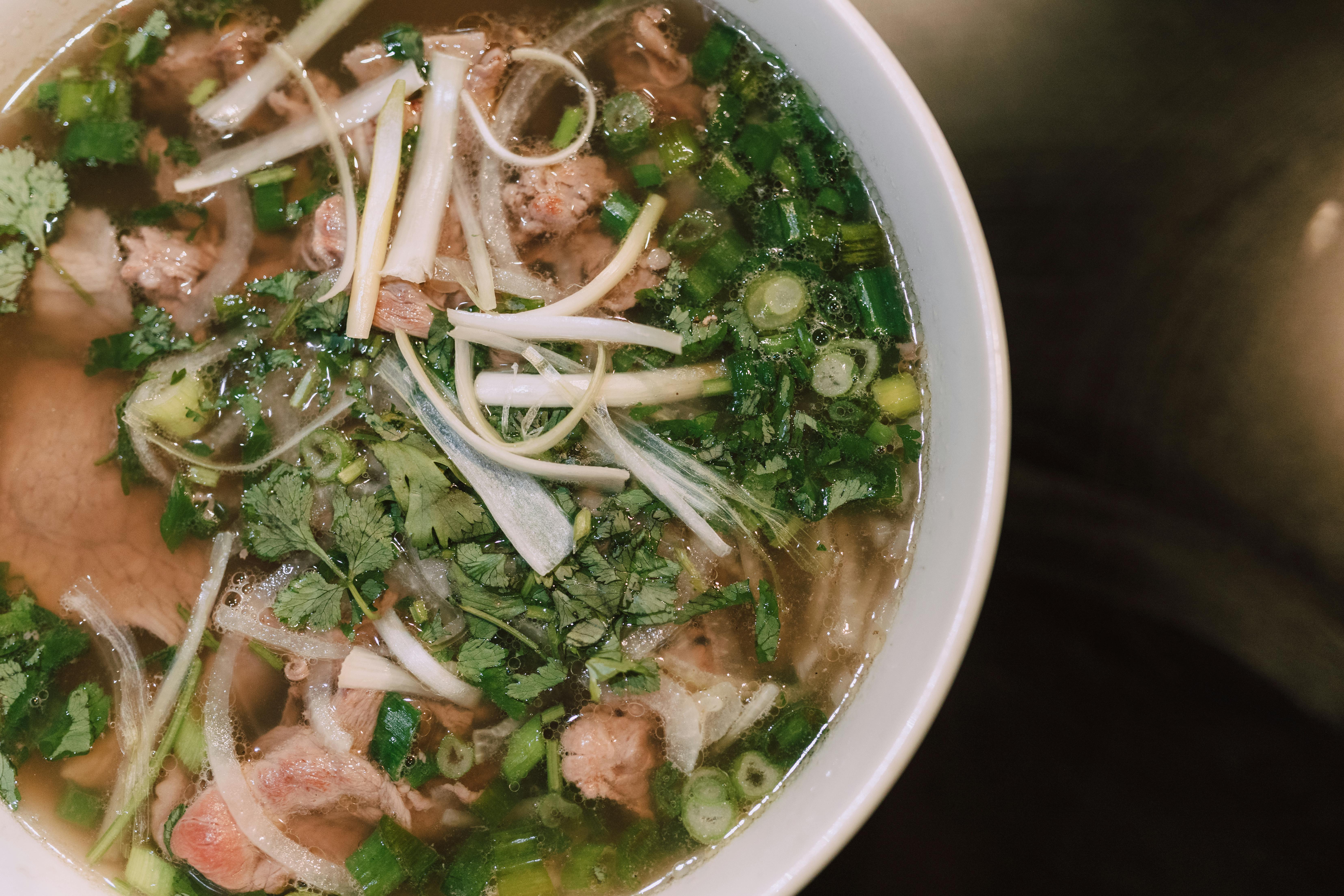
Pho is a Vietnamese noodle soup made with flat rice noodles, aromatic broth and usually beef or chicken. On a menu, phở bò means beef pho and phở gà means chicken pho. For a straightforward first order, choose chicken pho or beef pho with cooked beef, then taste the broth before adding condiments.
Part of the pleasure is how little a bowl needs to announce itself: steam rising above the table, soft noodles lifted with chopsticks, and a spoonful of broth between bites. Yet a short menu can raise surprisingly practical questions. What does tái mean? Will there be a plate of herbs? Is a bowl without meat vegetarian?
This guide to pho in Vietnam explains the main choices, regional differences, costs and useful ordering phrases so you can sit down with a clearer idea of what to expect.
What Is Vietnamese Pho?
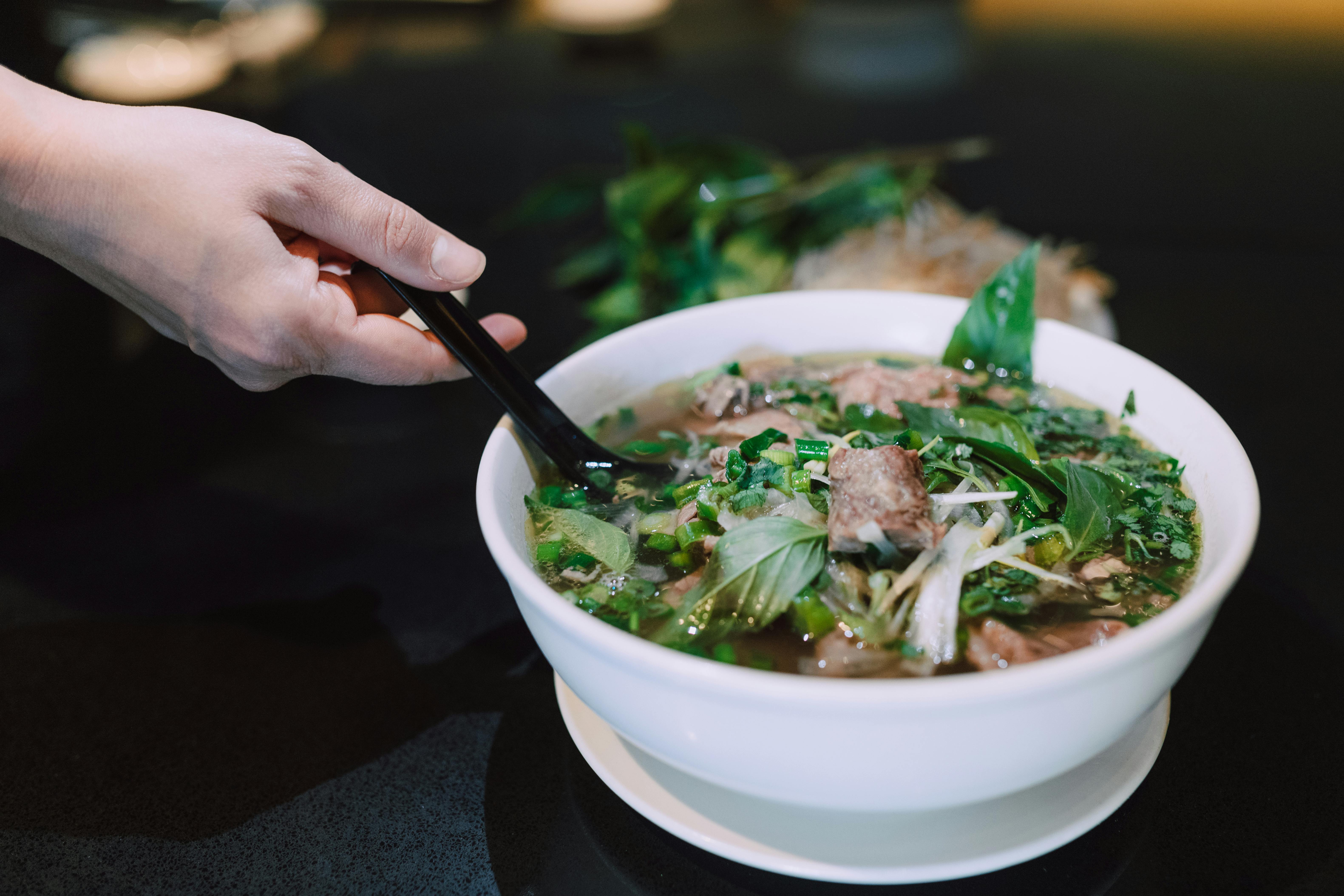
The soup brings together broth, bánh phở—flat rice noodles—meat and garnishes. Beef and chicken are the main versions, although vegetarian adaptations and other preparations exist. Phở is also the name used in dishes built around these noodles, so not every menu item containing the word is a soup. See this overview of pho and its variations.
The dish is associated with northern Vietnam, particularly Nam Dinh and Hanoi. Its precise origins are debated, so a single inventor or a neat origin story should be treated cautiously. Vietnam Tourism’s history of pho describes its northern roots and later development as it spread south.
For your trip, the useful takeaway is that pho has regional and individual identities. Two bowls can differ in sweetness, richness and accompaniments while both belonging comfortably within the tradition.
Pho Bo or Pho Ga: Which Should You Choose?
| Order | What it means | A useful starting point if… |
|---|---|---|
| Phở bò | Beef pho | You want to explore different beef cuts and textures |
| Phở gà | Chicken pho | You prefer chicken and a simpler choice of meat |
| Phở chay | Vegetarian pho | You want a meat-free version, with ingredients to confirm |
Do not assume that every shop serves all three. A specialist may focus only on beef or chicken, and a standard pho kitchen may not have vegetarian stock.
If you choose chicken, ask whether the meat is served bone-in or boneless if that matters to you. If you choose beef, the next decision is usually the cut or combination.
Understanding the Beef Pho Menu
These terms help you describe what you want, but English translations of cuts vary between menus. Chín describes cooked meat rather than one exact anatomical cut; đặc biệt describes the house special rather than a fixed recipe.
| Menu term | What to expect |
|---|---|
| Tái | Thin beef slices served rare or lightly cooked during preparation |
| Chín | Cooked beef slices |
| Tái chín | A combination of rare-style and cooked beef |
| Nạm | Beef often translated as flank or brisket, depending on the menu |
| Gầu | A fattier brisket cut |
| Gân | Tendon, with a gelatinous texture |
| Sách | Tripe |
| Bò viên | Beef meatballs |
| Đặc biệt | The shop’s special combination; ask what is included |
A simple first order: ask for phở bò chín if you want cooked beef without choosing several cuts. If you require all meat thoroughly cooked, say that explicitly rather than relying only on the menu name.
Northern vs Southern Pho: What Changes?
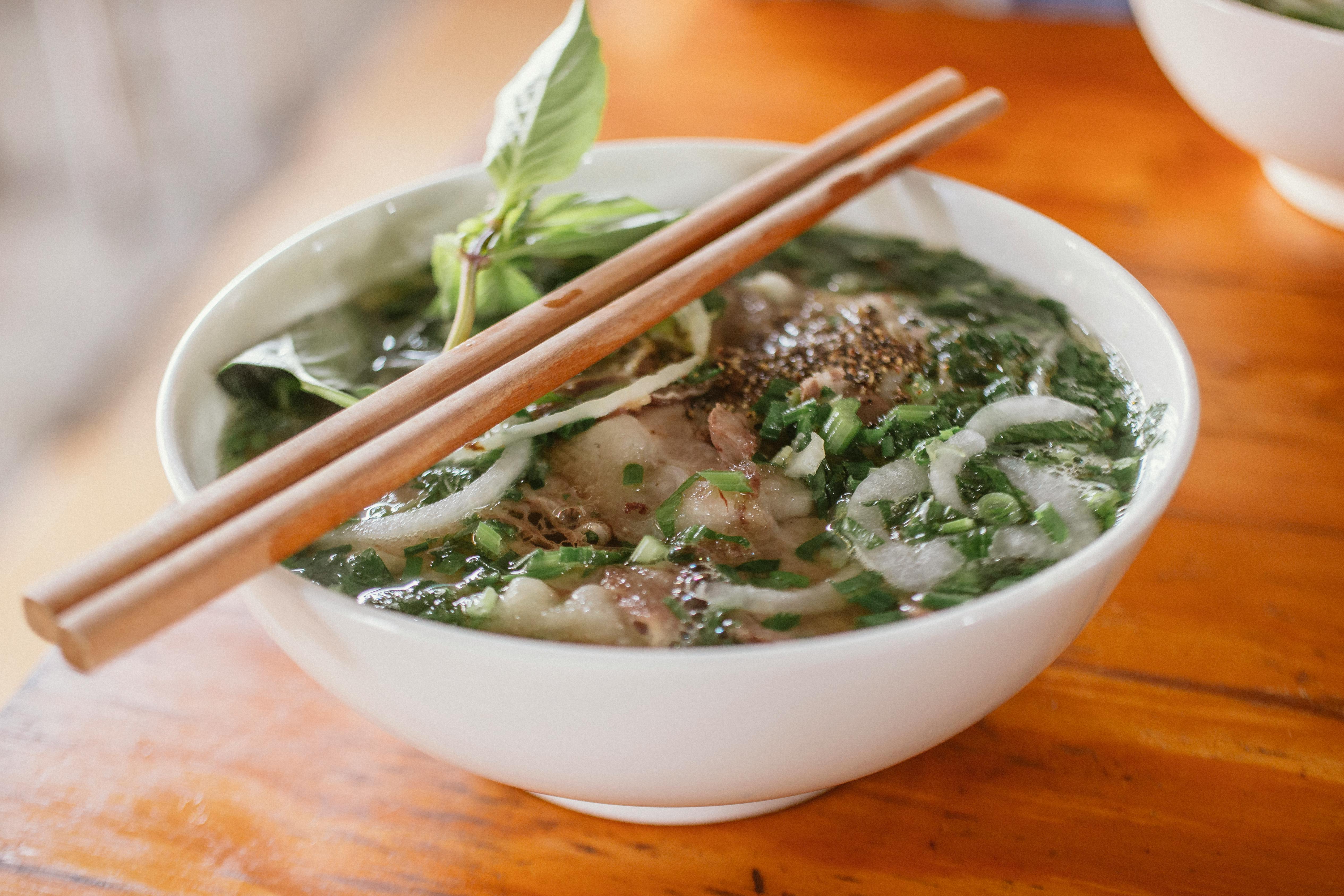
The broad distinction is in seasoning and accompaniments. Northern-style pho is often more restrained with side garnishes, while southern-style bowls commonly arrive with more herbs and condiments and can have a sweeter broth.
| Feature | Northern-style pho | Southern-style pho |
|---|---|---|
| A useful place to explore it | Hanoi | Ho Chi Minh City |
| Typical emphasis | Broth, noodles and meat with fewer additions | Broth with a wider choice of herbs and sauces |
| Sweetness | Often less sweet | Often sweeter |
| At the table | A large side plate of greens is not guaranteed | Herbs, bean sprouts, hoisin and chili sauce are more common |
These are tendencies, not rules. A northern-style shop can operate in Ho Chi Minh City, and neighboring shops can season their broths differently. Neither style needs to be judged against the other as the only authentic version.
If your itinerary includes both cities, order a similar cut in each and compare the broth before adding anything. That gives you a more useful comparison than ordering two heavily customized bowls.
How to Eat Pho: A Simple First-Bowl Guide
There is room for personal preference. The goal is to enjoy the bowl, not pass an etiquette test.
- Taste the broth first. Take a spoonful before adding sauces so you know what the kitchen has prepared.
- Lift a small portion of noodles. Use chopsticks for noodles and meat, and the spoon for broth or to support a bite. Ask for a fork if you need one.
- Add acidity or heat gradually. A little lime, chili or the condiments provided can change the balance quickly.
- Use herbs according to your taste. If a side plate arrives, you do not need to put everything in at once.
- Try dipping meat separately. Where hoisin and chili sauce are offered, a small dipping dish lets you season individual bites without changing all the broth.
If quẩy, fried dough sticks, are available, try a piece briefly dipped in the soup. Ask whether they cost extra; food placed on the table is not necessarily included in the bowl price.
Eat while the noodles still have their texture, but let hot broth cool enough before sipping. There is no need to finish every drop or every condiment.
How Much Does Pho Cost in Vietnam?
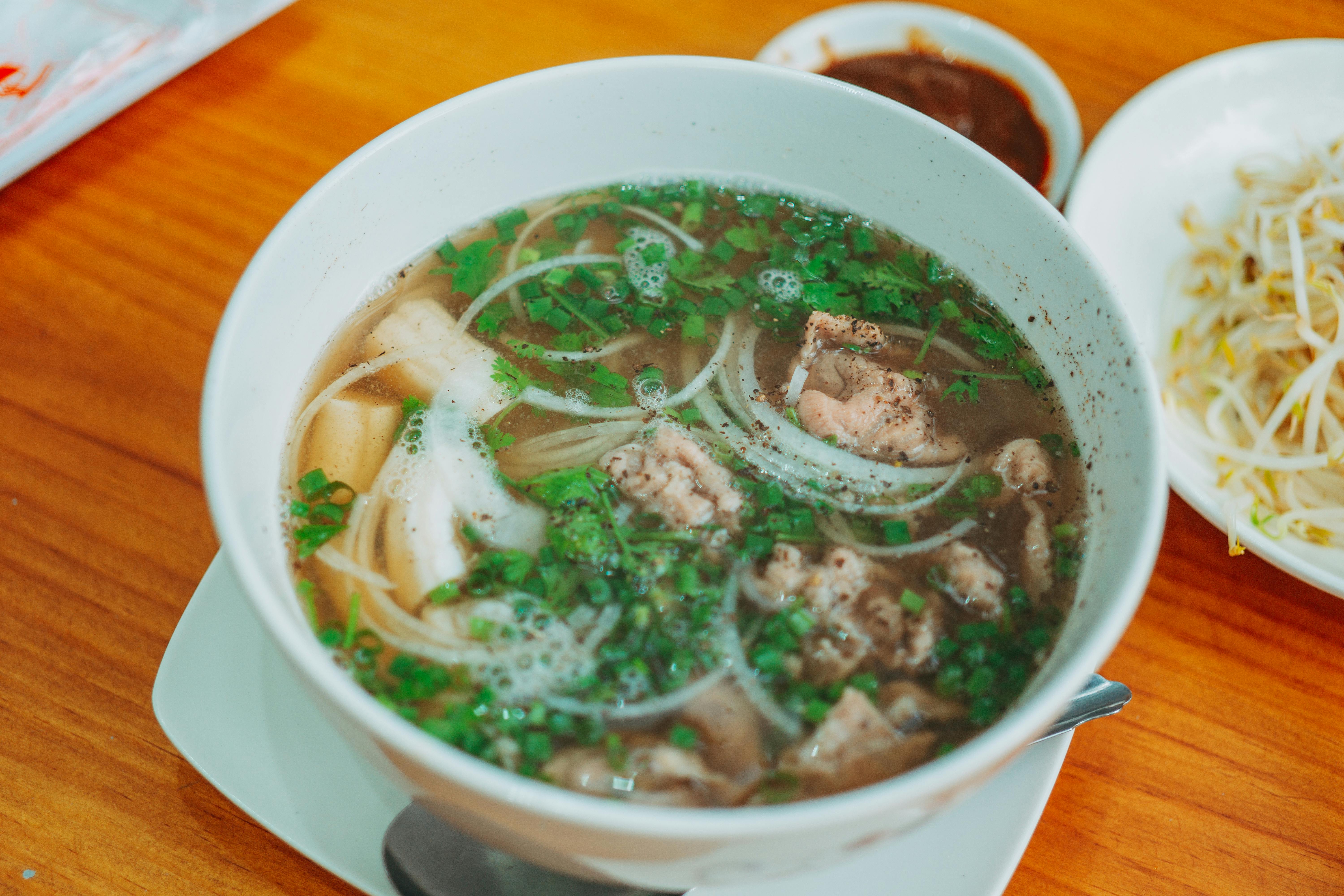
For planning, allow roughly VND 40,000–100,000 for a standard bowl at a casual pho shop. This is a working budget rather than a nationwide fixed price: a small neighborhood serving may cost less, while large specials, premium cuts, hotels and airports can cost more.
As a published point of comparison, Vietnam Airlines’ Ho Chi Minh City pho guide lists VND 45,000–80,000 for Pho Hung. Treat published figures as indicative and check the current menu at the particular branch you visit.
Before ordering, check three things:
- Portion: is the price for a small, regular or special bowl?
- Extras: are additional meat, an egg, quẩy or drinks charged separately?
- Payment: does the shop take cards, or will you need cash?
On a menu, 50k means VND 50,000. Small-denomination notes make payment easier at casual stalls.
When and Where to Try Pho
Pho is a familiar breakfast choice, especially in Hanoi, but individual shops may also serve later meals. Do not assume that a place recommended for breakfast stays open through dinner.
Choose a stop near your accommodation or sightseeing route, then check its current hours and recent menu photos. Ask whether it specializes in beef or chicken, and save its Vietnamese name to avoid confusing similarly named businesses.
For a useful first tasting, look for a place that prepares bowls to order, displays prices clearly and can answer your ingredient questions. A long queue may tell you it is popular; it does not by itself establish food safety or whether the menu suits you.
Finding Your Pho Stop on the Go
Mobile data is useful for locating a shop entrance, translating a menu and checking another option if your first choice has closed for the day. Save a few nearby alternatives before heading out.
If you are arranging connectivity for your trip, check the 5G Vietnam eSIM using Viettel on Klook. Confirm that your phone supports eSIM and is network-unlocked, then review the selected plan’s data allowance, validity and activation instructions. Check whether calls or SMS are included; coverage and available speeds depend on your location, device and plan.
Vegetarian, Gluten-Free and Food-Safety Questions
Is pho vegetarian if you remove the meat?
Usually not: a standard meat-based broth remains in the bowl. Look for phở chay and confirm the stock, fish sauce, toppings and any mock meats. Vegan travelers should explain their requirements as well. A dedicated vegetarian kitchen may make that conversation easier.
Is pho gluten-free?
The noodles are commonly rice-based, but that does not establish that the complete dish is gluten-free. Sauces, seasoning mixes, meatballs and shared preparation can matter. If you have coeliac disease or a serious allergy, explain the requirement and ask about ingredients and handling rather than relying on the dish name.
What should you know about rare beef and raw garnishes?
The tái option may involve raw beef slices added during assembly or briefly blanched. Do not assume that broth poured over them guarantees thorough cooking. If you need fully cooked meat, ask the kitchen explicitly.
The CDC’s food and drink guidance for travelers recommends thoroughly cooked food served hot and identifies raw vegetables and street-vendor food as higher-risk choices. If you choose street food, apply those precautions: favor a freshly prepared hot bowl and skip raw herbs or sprouts when you cannot assess washing and handling. Simply dipping raw garnishes into the bowl is not a reliable substitute for cooking them.
Frequently Asked Questions
Is pho spicy?
It does not have to be. Chili is often an addition you can control, although the broth’s seasoning varies. Request no added chili and taste before using the table condiments.
What is the difference between pho and bun bo Hue?
Pho uses flat rice noodles; bun bo Hue typically uses round rice noodles and a broth associated with lemongrass and shrimp paste. They are distinct dishes, so do not expect the same broth or toppings.
What does pho dac biet mean?
It means the shop’s special pho. It often combines several toppings, but the combination is not standardized. Ask what comes with it if you do not want tendon, tripe, meatballs or other particular ingredients.
Is pho only eaten for breakfast?
No. Breakfast is a good time to try it, but you can also find shops serving lunch or evening meals. Check the individual shop’s hours.
What is the easiest pho order for a first-time visitor?
Try phở bò chín for cooked beef or phở gà for chicken. Keep the first bowl simple, taste the broth, and adjust it gradually. You can explore additional cuts after discovering what you enjoy.
Your first bowl does not need to settle where Vietnam’s best pho is found. Choose a shop that fits your route, order the meat you want, and give the broth a moment before reaching for the sauces.