Cu Chi Tunnels: A Practical First-Visit Guide
Plan a first visit to the Cu Chi Tunnels from Ho Chi Minh City, including site choices, realistic timing, tunnel access and what to bring.

Published on 10 min read

On this page
The Cu Chi Tunnels are one of the most popular historical day trips from Ho Chi Minh City.
The underground network was developed over many years and used for shelter, communication, storage, medical care and military operations during wartime. Today, visitors can explore preserved and reconstructed sections, see hidden entrances and learn how people lived underground.
For a first visit, the most important decision is simple:
Ben Dinh or Ben Duoc?
Updated: September 2026. Opening hours, entrance fees, bus routes and tour prices can change. Check current information shortly before your visit.
Quick facts
| Cu Chi Tunnels | |
|---|---|
| Distance from central Ho Chi Minh City | Roughly 45–60+ km depending on the site |
| Travel time | Around 1.5–2 hours each way by road |
| Opening hours | 7:00 AM–5:00 PM daily |
| Time needed at the site | Around 2–3 hours |
| Best for | History, first-time visitors, half-day trips |
| Main visitor sites | Ben Dinh and Ben Duoc |
| Foreign visitor budget for standard daytime admission | Around 125,000 VND |
The official Cu Chi Tunnels site lists daily operation from 7:00 AM to 5:00 PM.
Official Cu Chi Tunnels website
Ben Dinh or Ben Duoc?
There are two main visitor areas.
Ben Dinh
Ben Dinh is closer to central Ho Chi Minh City and is the site used by many half-day group tours.
Choose Ben Dinh if:
- you have limited time
- you want the easiest first visit
- you are joining a standard group tour
- you prefer a more compact visitor area
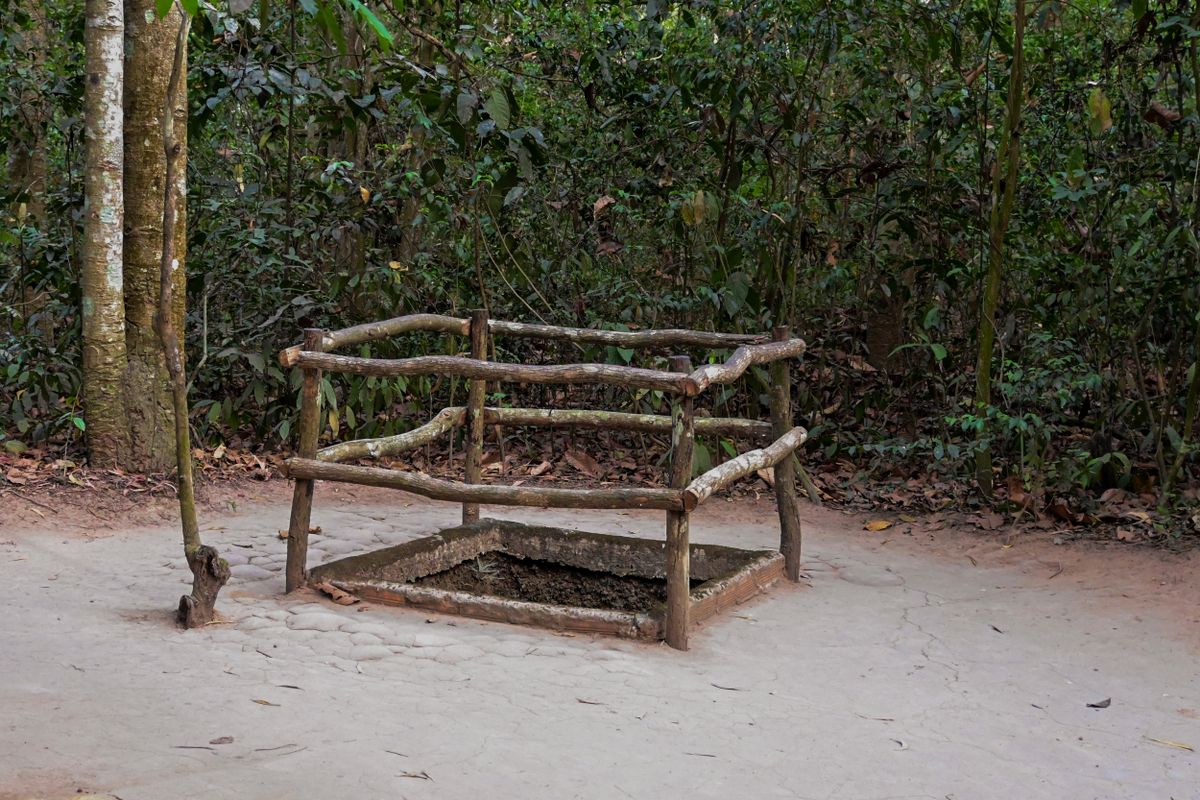
The tunnels used by visitors have been adapted in places to make them easier to enter.
Ben Duoc
Ben Duoc is farther from the city and has a larger historical area.
Choose Ben Duoc if:
- you want more time at the site
- you prefer a less rushed visit
- you want to see the Ben Duoc Memorial Temple
- you are interested in the larger historical complex
A 2026 Vietnam Tourism guide recommends Ben Duoc for a deeper visit and Ben Dinh when time is limited.
Read the 2026 Vietnam Tourism Cu Chi guide
How much does it cost in 2026?
Published 2026 prices vary slightly depending on the site and how the entrance and visitor-service fees are listed.
A practical budget for an international visitor is:
around 125,000 VND per adult for the standard daytime visit
Vietnamese adult admission is commonly listed at around:
35,000 VND
Some optional areas and activities have separate charges.
At Ben Duoc, the Liberated Zone reconstruction area is an additional attraction and may require a separate ticket.
Because the fee structure can be shown differently at Ben Dinh and Ben Duoc, check the amount at the official ticket counter when you arrive.
A separate evening historical program, Trăng Chiến Khu, has been listed in 2026 at 399,000 VND per person.
2026 Cu Chi travel guide and current prices – VnExpress
How to get there from Ho Chi Minh City
For most travelers, there are three practical choices.
1. Join a half-day tour
This is the easiest option.
Most tours include:
- transport from central Ho Chi Minh City
- an English-speaking guide
- entrance arrangements
- around 2–3 hours at the tunnels
Many standard half-day tours go to Ben Dinh.
A morning trip usually leaves around 7:00–8:00 AM and returns to the city in the early afternoon.
Check exactly which tunnel site your tour visits before booking.
2. Grab, taxi or private car
This is the easiest option if you want your own schedule.
From central Ho Chi Minh City, allow roughly:
1.5–2 hours each way
Traffic can make the trip longer.
A July 2026 VnExpress guide gives around 500,000 VND each way as a taxi reference price, but Grab and taxi fares can change with demand and pickup location.
A private car becomes more reasonable if two to four people are sharing the cost.
3. Public bus
Public transport is possible, but it takes much longer.
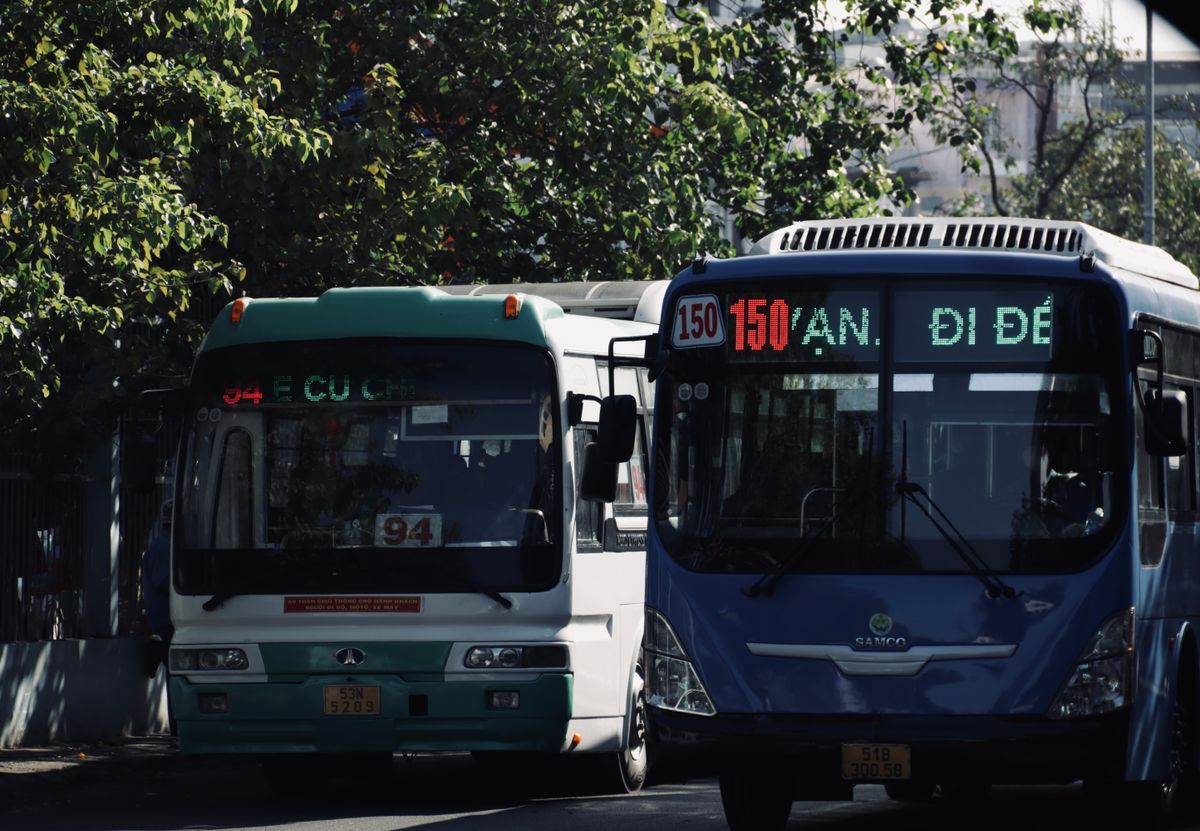
From central Ho Chi Minh City, bus route 13 runs from Saigon Bus Station to Cu Chi Bus Station.
Route 13 is included in Ho Chi Minh City’s current free bus program from July 1 to December 31, 2026.
From the Cu Chi area, you still need a local connection.
Useful local routes include:
- Route 79 toward Ben Duoc
- Route 70 for the Ben Dinh area
Bus routes and transfer points can change, so use MultiGo or another live transit planner on the day you travel.
Public bus is best if saving money matters more than saving time.
What happens when you arrive?
A normal visit includes several parts.
You may see:
- a short historical introduction
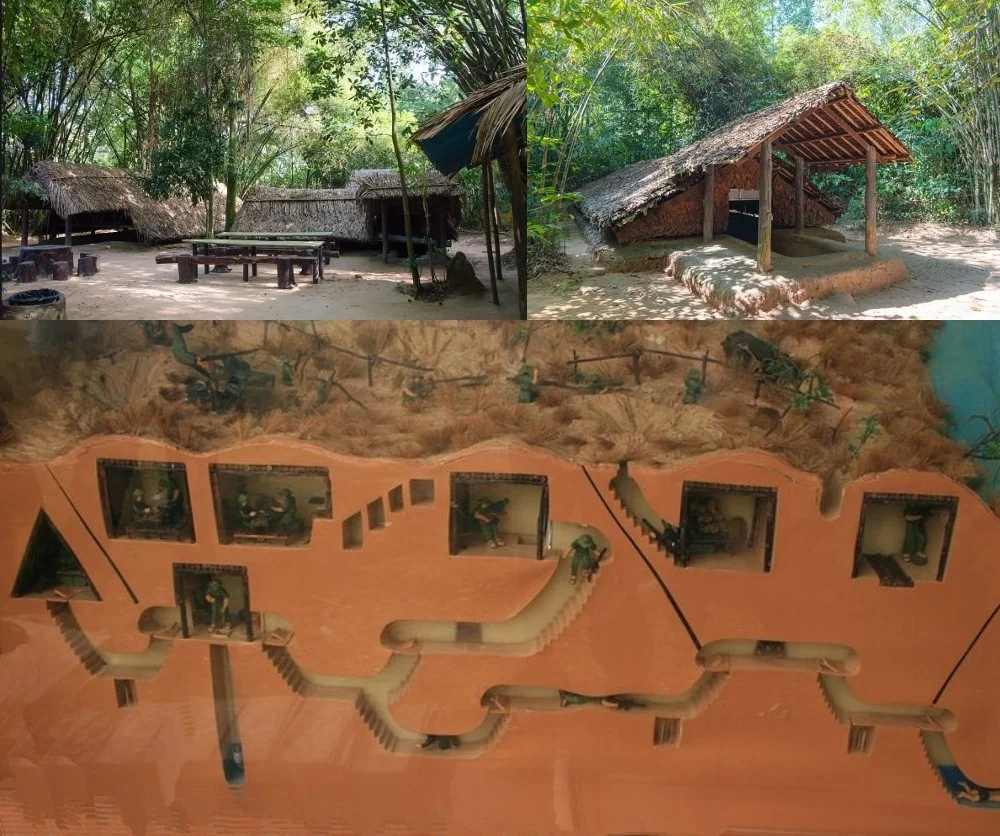
- maps of the tunnel network
- hidden tunnel entrances
- ventilation systems
- reconstructed shelters
- kitchens
- medical and meeting areas
- wartime displays
- sections of tunnel that visitors can enter
Guides explain how the underground network was organized and how people lived and moved through it.

Do you have to crawl through the tunnels?
No.
Going underground is optional.
The visitor sections are narrow, low and warm. Even sections adapted for tourists can feel very confined.
You can leave through exits along the route instead of completing the longest section.
If you have:
- claustrophobia
- breathing problems
- heart problems
- knee or back problems
- limited mobility
it may be better to stay above ground.
You can still see most of the historical displays without entering the tunnels.
What should you wear?
Wear clothes that you do not mind getting dusty.
Good choices are:
- lightweight T-shirt
- shorts or comfortable trousers
- trainers or other secure shoes
- hat
- insect repellent
- sunscreen
The ground can become muddy during the rainy season.
Avoid carrying a large backpack into the tunnel sections.
Bring water, especially if you visit around midday.
Go in the morning if you can
Morning is usually the easiest time for a first visit.
You get:
- cooler temperatures
- more time before closing
- less risk of afternoon rain during the wet season
- an easier return to Ho Chi Minh City
Leaving central Ho Chi Minh City at around 7:00 AM works well for an independent trip.
If you only have half a day, choose Ben Dinh.
If you have more time and historical interest, consider Ben Duoc.
The shooting range is optional
Some Cu Chi visitor areas have a paid shooting range.
It is completely optional and is not necessary to understand or enjoy the historical site.
If you are not interested, simply skip it and continue with the other exhibits.
Follow all on-site age, safety and staff instructions if you choose to participate.
Try the cassava
Visitors are often offered or shown boiled cassava with sesame and peanut salt, a simple food associated with wartime life in the area.
It is a small part of the visit, but it helps connect the underground displays with everyday life during the period.
Cu Chi also has local restaurants serving southern Vietnamese food if you stay for lunch.
Stay connected on the way to Cu Chi
Mobile data is useful for checking:
- Grab
- Google Maps
- bus routes
- tour messages
- your return route to Ho Chi Minh City
If you need mobile data when arriving in Vietnam, one option is a 5G eSIM Vietnam | Viettel.
Buy a 5G eSIM Vietnam | Viettel
Before buying an eSIM, make sure your phone supports eSIM and is carrier-unlocked.
It is also a good idea to download an offline map before leaving central Ho Chi Minh City.
How much time should you allow?
Half-day trip
A normal half-day looks roughly like this:
7:00–8:00 AM
Leave Ho Chi Minh City.
9:00–10:00 AM
Arrive at Cu Chi.
2–3 hours
Explore the site.
1:00–2:30 PM
Return toward central Ho Chi Minh City.
Traffic can change the schedule considerably.
Full day
A full day makes more sense if you choose Ben Duoc or want to combine Cu Chi with another destination.
Do not try to combine too many distant attractions unless you are comfortable spending a large part of the day in a vehicle.
Is Cu Chi suitable for children?
Older children and teenagers who are interested in history may enjoy the visit.
However, parents should know that the site includes:
- wartime displays
- traps
- weapons
- underground spaces
- discussions of combat
The tunnels are also hot and physically awkward.
Younger children do not need to enter the underground sections.
A respectful way to visit
Cu Chi is a tourist attraction, but it is also a historical and memorial site.
Some areas commemorate people who died during wartime.
Keep your voice down around memorial spaces and follow local signs.
Photography is common in the visitor areas, but do not climb on displays or enter restricted areas for a photo.
Is a Cu Chi Tunnels trip worth it?
Cu Chi is worth considering if you:
- are visiting Ho Chi Minh City for the first time
- want historical context for southern Vietnam
- are interested in how the tunnel system worked
- have at least half a day available
You may want to skip it if:
- you only have one full day in Ho Chi Minh City
- long road transfers bother you
- you have no interest in war history
- underground or confined spaces make you uncomfortable
You do not need to crawl through a tunnel to make the trip worthwhile.
Quick first-visit checklist
Before leaving Ho Chi Minh City:
- Decide between Ben Dinh and Ben Duoc
- Check the current opening hours
- Check your ticket or tour inclusions
- Leave early
- Wear comfortable clothes and shoes
- Bring water
- Bring insect repellent
- Download an offline map
- Keep your phone charged
- Allow extra time for traffic
Our practical advice
For most first-time visitors, Ben Dinh is the simplest half-day option because it is closer and widely used by organized tours.
Choose Ben Duoc if you have more time and want a larger historical complex with the memorial area.
Whichever one you choose, leave Ho Chi Minh City early, wear clothes suitable for dust and heat, and do not feel pressured to crawl through every tunnel.
The most valuable part of the visit is understanding how the underground system worked and the conditions in which people lived — not simply getting the classic tunnel photo.