Respectful travel in Vietnam: small habits that help
Approach photos, shared spaces and cultural visits with attention to the people around you.

Published on 9 min read

On this page
You do not need to know every Vietnamese custom before your trip.
Most people understand that visitors come from different cultures.
A few small habits, however, can make everyday interactions easier and show that you respect the people and places you are visiting.
From temples and markets to family homes and local neighborhoods, these simple ideas are useful almost anywhere in Vietnam.
Learn two Vietnamese words
You do not need to speak Vietnamese to travel around the country.
But learning a few basic words is appreciated.
Start with:
Xin chào – Hello
Cảm ơn – Thank you
You can also simply smile and say “cảm ơn” after buying food, receiving directions or getting help.
Do not worry too much about perfect pronunciation.
Making the effort is often more important.
Dress respectfully at temples and pagodas
Vietnamese cities are generally relaxed about clothing.
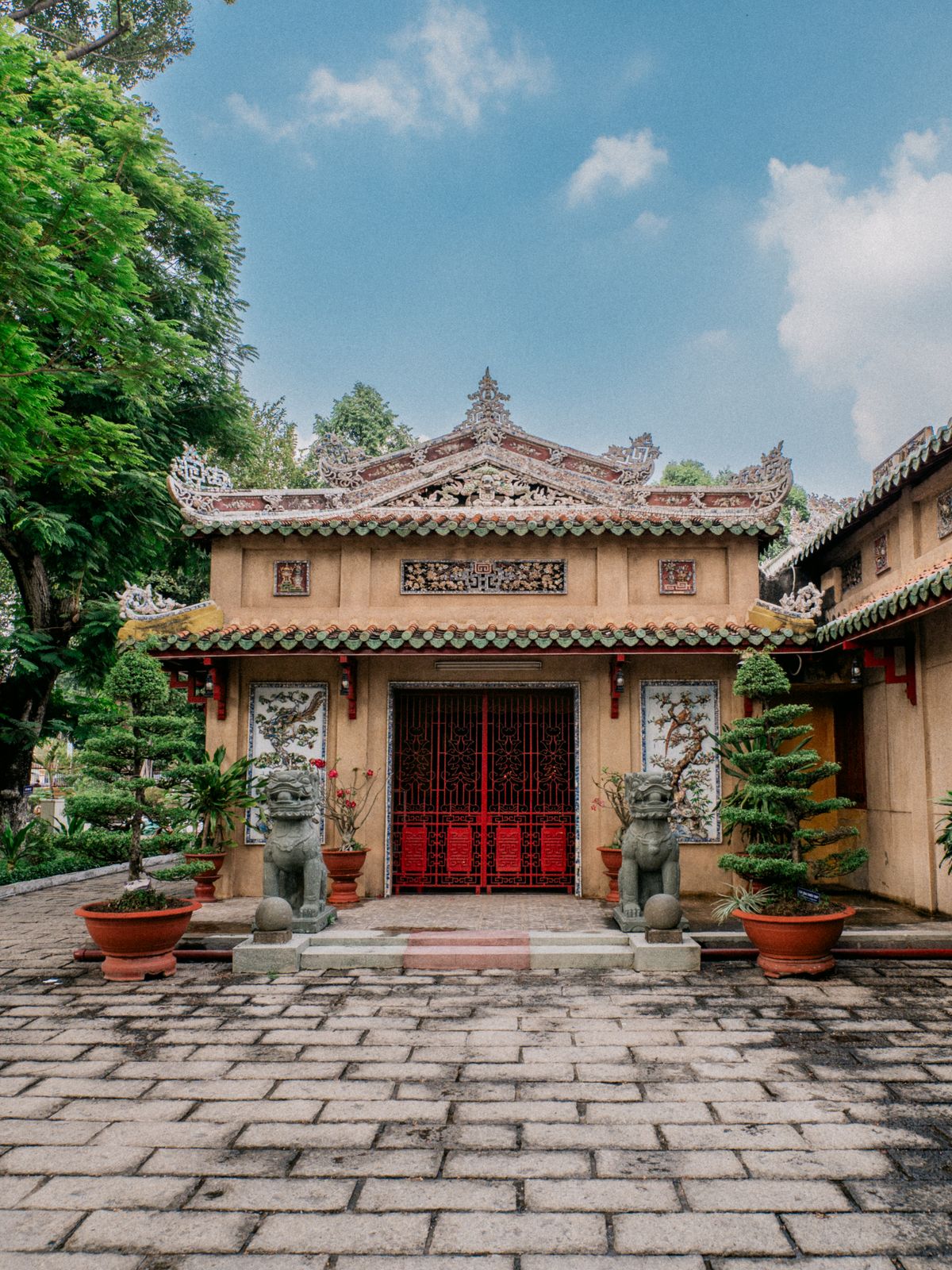
Religious places are different.
When visiting a temple, pagoda or other important religious site, it is safer to wear clothes that cover your:
- shoulders
- chest
- knees
Remove your hat when entering a temple or pagoda.
Some places may also ask visitors to remove their shoes before entering certain buildings.
Look at what local visitors are doing and follow any signs or instructions.
Official Vietnam Tourism guidance also recommends modest clothing at religious sites.
Read Vietnam Tourism’s etiquette guide
Take your shoes off when entering someone’s home
If you are invited into a Vietnamese home, check whether shoes are left near the entrance.
In many homes, people remove their shoes before going inside.
If you are unsure, simply ask or follow what your host does.
Vietnamese homes and some small businesses may also have an altar.
Do not:
- sit on the altar
- place bags or drinks on it
- step over a low altar
- move religious objects for a photograph
It may look decorative to a visitor, but it is an important place of worship for the family.
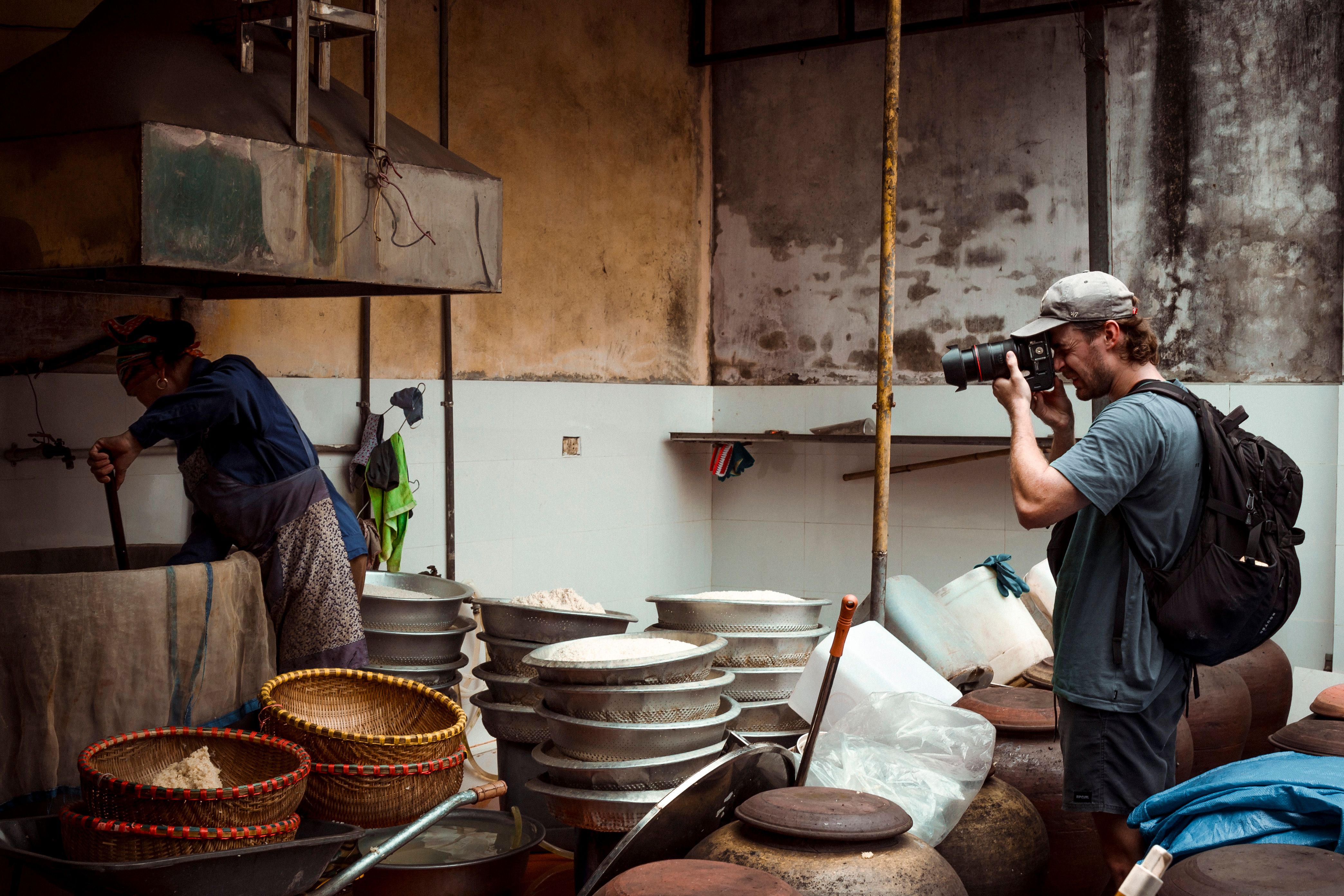
Ask before photographing people
Vietnam is full of great street photography opportunities.
Markets, food stalls, workshops and neighborhood streets can all be interesting places to photograph.
But if one person is clearly the subject of your photo, ask first.
You can smile, point to your camera and wait for a yes.
Or say:
“Cho tôi chụp ảnh được không?”
This means roughly:
“May I take a photo?”
If someone says no, turns away or looks uncomfortable, leave them alone.
Read more:
Photography in Vietnam: asking permission and giving people space
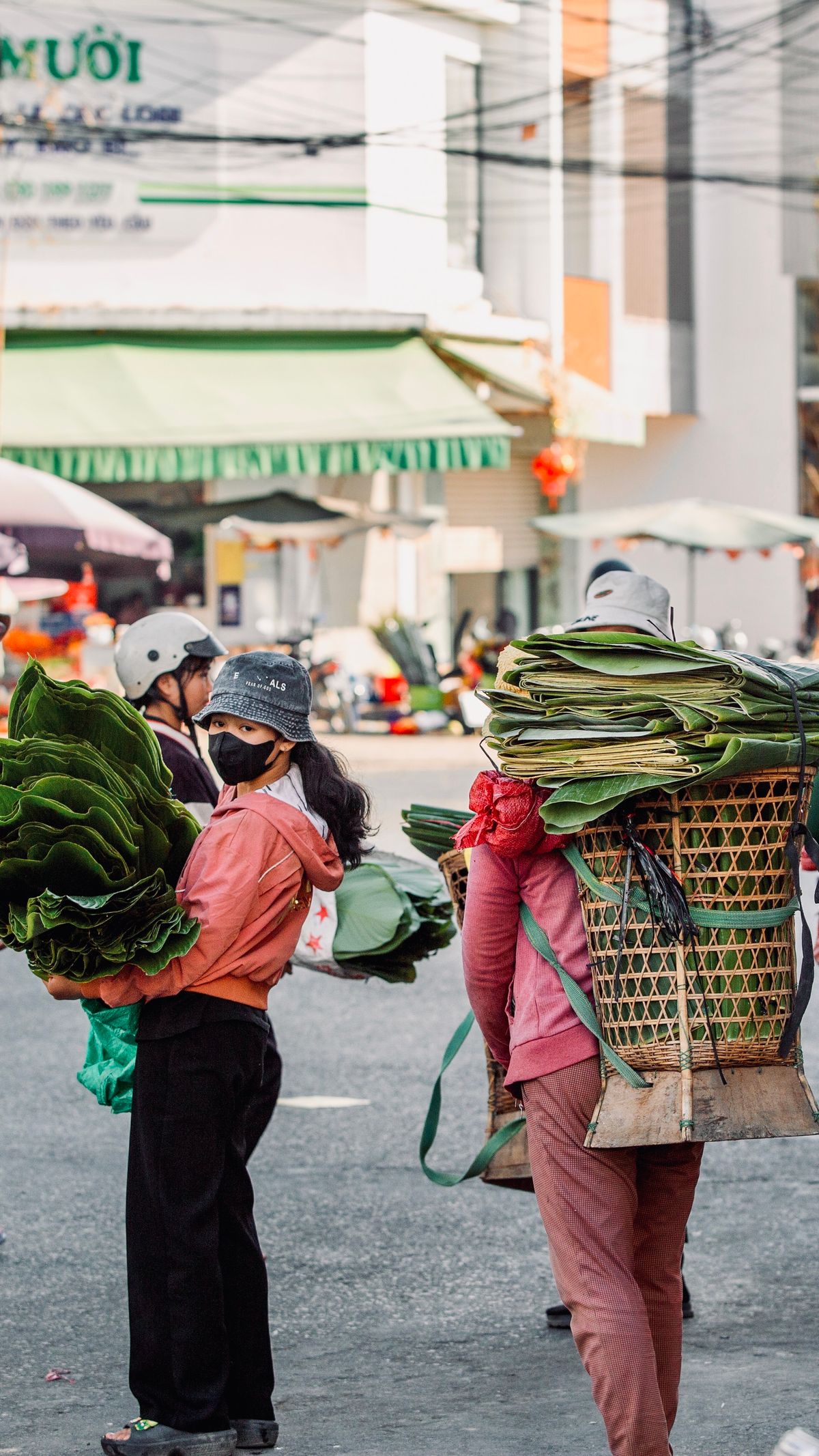
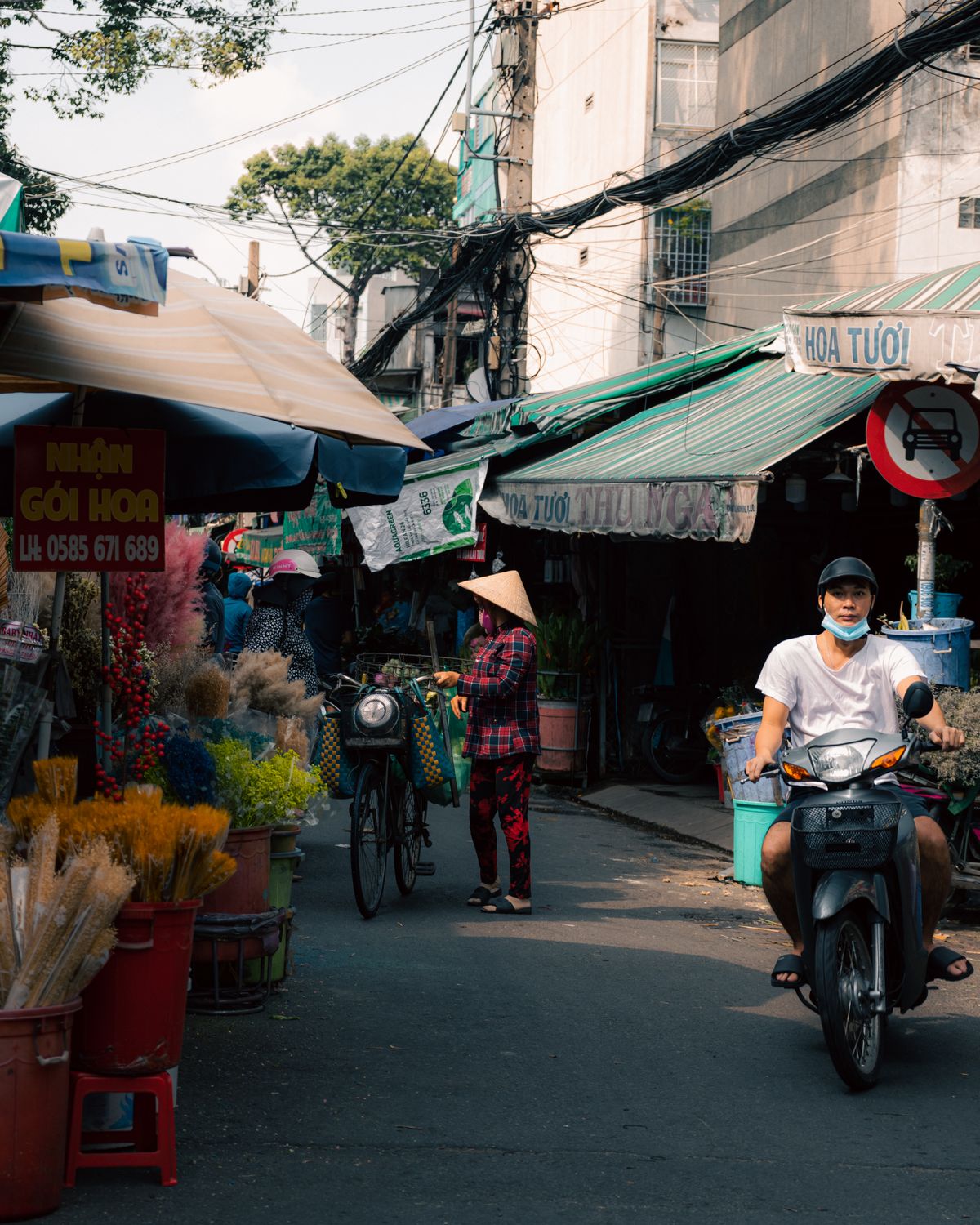
Remember that markets are workplaces
Traditional markets are interesting places for visitors, but they are also where people work.
Try not to:
- block narrow paths
- stand in front of a stall for a long time without buying
- move products just for a photograph
- stop in the path of people carrying goods
- enter private areas behind stalls
Some markets become very busy early in the morning.
Workers may be carrying heavy boxes, pushing carts or moving motorbikes through narrow spaces.
Give them room.
Bargain politely
Bargaining is normal in some traditional markets and tourist shopping areas.
It is not expected everywhere.
Supermarkets, convenience stores, shopping malls, restaurants and stores with clearly displayed fixed prices usually do not require bargaining.
At a market, you can ask:
“Bao nhiêu?”
meaning:
“How much?”
If you want to negotiate, keep it friendly.
You can offer a lower price and smile.
If the seller says no and you do not want to pay the price, simply say thank you and walk away.
Avoid getting angry over a small difference.
For example, spending several minutes arguing over 10,000 or 20,000 VND may not be worth the stress for either person.
Vietnam Tourism also notes that gentle bargaining is common in casual markets and tourist shopping areas.
Read Vietnam Tourism’s guide to money and payments
Buy something when you can
Travel spending can directly support local businesses.
Instead of only photographing a small food stall, market or family workshop, consider buying something if you are genuinely interested.
That could be:
- a coffee
- fruit
- a local snack
- handmade ceramics
- textiles
- souvenirs
- a meal at a family-run restaurant
You do not have to buy something everywhere.
But spending some of your travel budget with locally owned businesses is one simple way your trip can benefit the people who live there.
Vietnam Tourism also encourages travelers to support local food producers, craftspeople, homestays and community-based tourism.
How to travel responsibly in Vietnam
Do not leave rubbish behind
This one is simple.
If there is no bin nearby, keep your rubbish with you until you find one.
This is especially important at:
- beaches
- mountains
- waterfalls
- national parks
- islands
- rural viewpoints
A small bag in your backpack can be useful for keeping wrappers, tissues or empty bottles.
If your hotel provides filtered drinking water, refilling a bottle can also reduce the number of disposable plastic bottles you use during your trip.
Be careful with wildlife experiences
Not every experience involving animals is good for the animal.
Be cautious about activities that involve:
- riding wild animals
- forcing animals to perform
- holding wildlife for photographs
- feeding wild animals
- getting extremely close for selfies
A better wildlife experience usually allows you to observe the animal without forcing interaction.
For example, Vietnam’s ethical elephant experience at Yok Don National Park focuses on observing elephants rather than riding or bathing them.
Read about Vietnam’s ethical elephant experience
Keep your voice down in quiet places
Vietnamese cities can be noisy.
Motorbike horns, markets and busy restaurants are part of everyday life.
That does not mean every place should be loud.
Speak more quietly when visiting:
- temples
- pagodas
- museums
- memorial sites
- family homes
- small villages
- quiet cafés or homestays
During prayers or ceremonies, avoid loud conversations and phone calls.
Do not treat neighborhoods like theme parks
Some of the most interesting places in Vietnam are ordinary neighborhoods.
You may find:
- small alleys
- old houses
- local markets
- workshops
- residential courtyards
- street food stalls
Remember that people actually live there.
Avoid standing directly in front of someone’s doorway, looking through windows or entering private courtyards without permission.
If a place feels private, treat it as private.
Be patient when communication is difficult
Not everyone you meet will speak English.
This is especially common away from major tourist areas.
Speaking English louder usually does not help.
Instead:
- Use simple words.
- Show the address on your phone.
- Use Google Translate.
- Point to the item you want.
- Stay patient.
Learning a few Vietnamese words also helps.
Small communication problems are normal when traveling.
They do not need to become arguments.
Stay calm when something goes wrong
Your meal may arrive differently from what you expected.
A driver may misunderstand your destination.
A hotel may make a mistake.
A shopkeeper may not understand your question.
Try to solve the problem calmly.
Vietnam Tourism’s etiquette guidance specifically recommends avoiding loud arguments and publicly embarrassing someone.
In many situations, staying calm gets better results anyway.
Respect queues and shared spaces
Queues in Vietnam may sometimes feel less obvious than in your home country.
Even so, avoid pushing in front of people when there is clearly a line.
This is especially useful at:
- airports
- ticket counters
- toilets
- cable cars
- attractions
- hotel reception desks
On buses, trains and other shared transport, keep your bags out of the aisle and avoid playing videos loudly without headphones.
Be thoughtful when visiting rural and ethnic minority communities
Northern Vietnam and the Central Highlands are home to many different ethnic communities.
Their clothing, homes, languages and traditions may be interesting to visitors, but they are not tourist displays.
Ask before:
- photographing someone closely
- entering a home
- joining a ceremony
- touching traditional clothing or objects
- photographing children
Hiring a local guide can also help you understand what you are seeing rather than simply passing through for photos.
Do not expect everything to work like home
Part of traveling is accepting that everyday routines can be different.
Service may be faster or slower.
Meals may arrive at different times.
Traffic works differently.
Shops may close unexpectedly.
English may not always be available.
Instead of judging every difference against your home country, try to understand how things work locally.
That usually makes traveling in Vietnam much easier.
Small habits that make a difference
You do not need to travel perfectly.
A respectful trip can be as simple as:
- learning “xin chào” and “cảm ơn”
- dressing appropriately at temples
- asking before taking portraits
- taking your shoes off when entering a home
- keeping your rubbish until you find a bin
- bargaining with a smile
- giving workers space at markets
- supporting local businesses
- keeping noise down in quiet places
- being patient when communication is difficult
None of these things require much effort.
Together, they make travel more comfortable for you and for the people you meet.
One simple rule
When you are unsure what to do, look around.
Watch how local people behave.
If you still are not sure, ask.
Most small cultural mistakes are not a problem when you are polite and willing to learn.
Vietnam is an easy place to enjoy when you travel with curiosity, patience and a little consideration for the people around you.